How AI Is Transforming the Modern Workplace
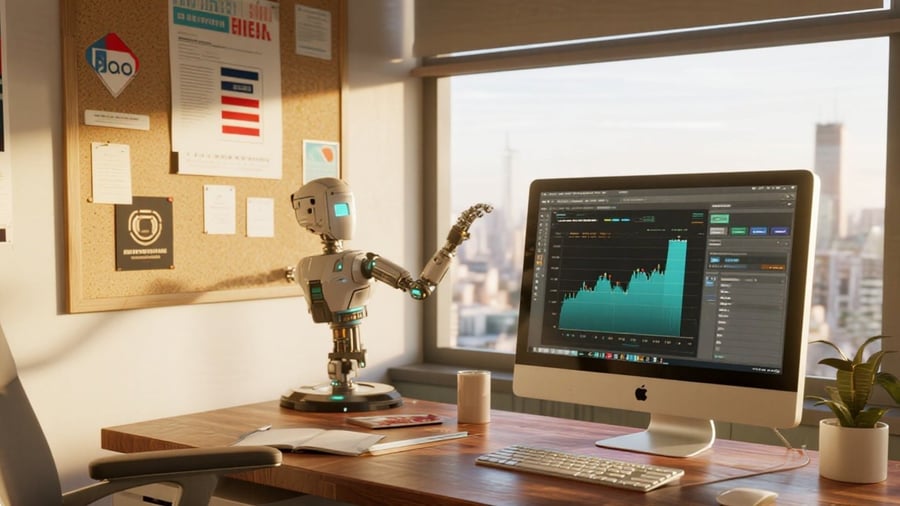
What Is AI in the Office?
AI in the workplace refers to software and tools that simulate human intelligence to perform tasks such as:
Automating repetitive processes
Analyzing large sets of data
Enhancing communication and collaboration
Supporting decision-making through insights and predictions
These systems can include machine learning algorithms, natural language processing (NLP), and robotic process automation (RPA).
Common AI Office Applications
AI is being integrated into everyday business tools, making it accessible even for small companies. Popular use cases include:
Email and calendar assistants: Tools like Google Assistant and Microsoft 365 Copilot automate scheduling, reminders, and inbox management.
Customer service automation: AI chatbots handle customer inquiries 24/7, freeing up human support teams for more complex issues.
Document drafting and editing: AI writing tools like Grammarly, ChatGPT, and Jasper help improve communication and content creation.
Data entry and analysis: AI can process spreadsheets, extract trends, and generate reports in seconds.
Recruiting and HR: AI systems screen resumes, match candidates, and help reduce hiring bias.
Virtual collaboration: Tools like Zoom, Slack, and Notion integrate AI to suggest meeting times, summarize discussions, and organize projects.
Benefits of AI in the Office
Adopting AI in workplace operations brings several advantages:
Increased productivity – Automating low-value tasks lets teams focus on strategic work.
Better decision-making – AI tools analyze data faster and more accurately than manual methods.
Cost savings – Reducing the need for manual labor or administrative overhead.
24/7 availability – AI tools can operate around the clock, supporting global or remote teams.
Personalization – Smart systems adapt to users' habits to offer tailored suggestions and automation.
Challenges and Considerations
While the potential is immense, AI implementation also comes with concerns:
Privacy and security – Businesses must ensure customer and employee data are handled securely.
Accuracy and bias – AI systems can reflect biases from their training data, affecting decision-making.
Employee training – Staff need support and education to use AI tools effectively.
Over-reliance – It’s important to maintain human oversight for critical thinking and ethical judgment.
Choosing trusted providers and setting clear policies can mitigate most of these risks.
Popular AI Office Tools in 2025
Here are some of the most commonly used AI tools in the workplace:
ChatGPT (OpenAI) – For drafting emails, summarizing notes, writing reports
GrammarlyGO – Smart writing and editing assistant
Zoom AI Companion – Real-time meeting transcriptions and action items
Notion AI – Brainstorming, knowledge base management, and task organization
Otter.ai – Live transcription and meeting summaries
Trello with AI – Task prediction and smart project workflows
HubSpot AI – CRM automation and marketing optimization
These tools can be integrated with platforms your teams already use, such as Google Workspace or Microsoft Office.
AI for Remote and Hybrid Work
AI has played a crucial role in supporting remote and hybrid work environments by:
Helping teams manage time zones and meetings efficiently
Generating insights from virtual meetings
Automating repetitive admin tasks for remote workers
Enhancing cybersecurity for distributed teams
Improving onboarding with AI-driven training programs
For companies embracing remote-first models, AI is now a competitive necessity.
Future Trends in AI Office Technology
As AI continues to evolve, expect to see:
Voice-activated workstations that respond to spoken commands
Real-time translation for global teams
Emotion AI to improve customer service and employee well-being
AI-driven strategic planning using predictive models
Autonomous agents handling entire tasks or workflows end-to-end
The workplace of the future is becoming more adaptive, responsive, and intelligent—driven by advancements in AI.
Final Thoughts
AI is no longer a futuristic concept—it’s now a vital tool for staying competitive and efficient in the workplace. Whether you're a business owner seeking productivity gains or an employee looking to simplify your workflow, adopting AI office tools can deliver measurable value. As with any technology, the key is to balance automation with human insight and ethics.